Exhibition Recap: Photometric Stereo Inspection in Kariya
 kotai2003
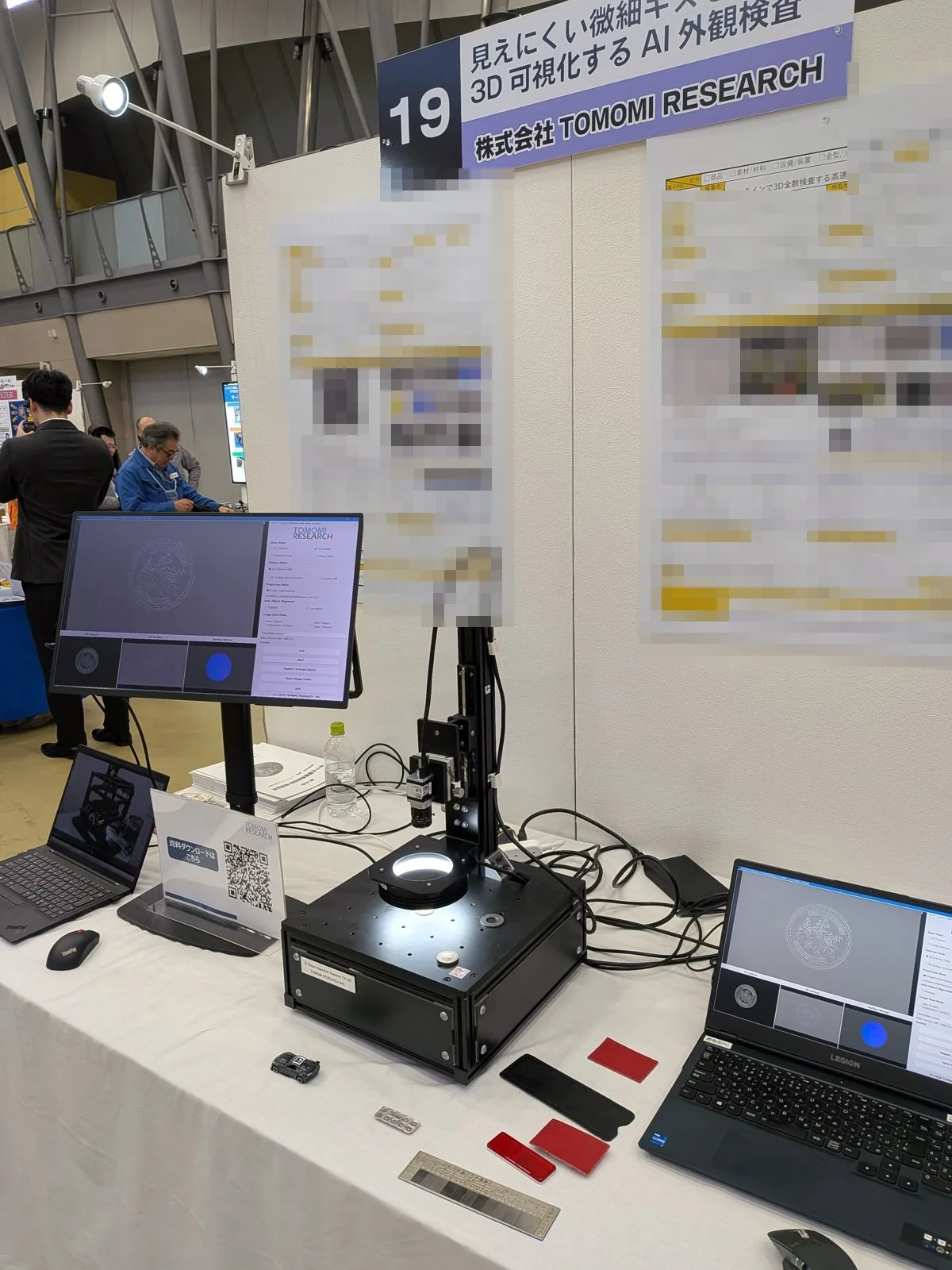
On November 25–26, 2026, TOMOMI RESEARCH, INC. exhibited at the 2026 Kanagawa Automotive Technology Exhibition & Business Meeting in Kariya (2026年度 神奈川県自動車関連技術展示商談会 in 刈谷), held at Aioi Hall, Kariya City Industrial Promotion Center in Kariya, Aichi. At Booth No. 19, we showed how photometric stereo makes defects visible that a standard camera or the human eye cannot see, and how AI then inspects them. Thank you to everyone who stopped by. You can find our pre-show announcement here.
A Business Meeting in an Automotive Parts Hub
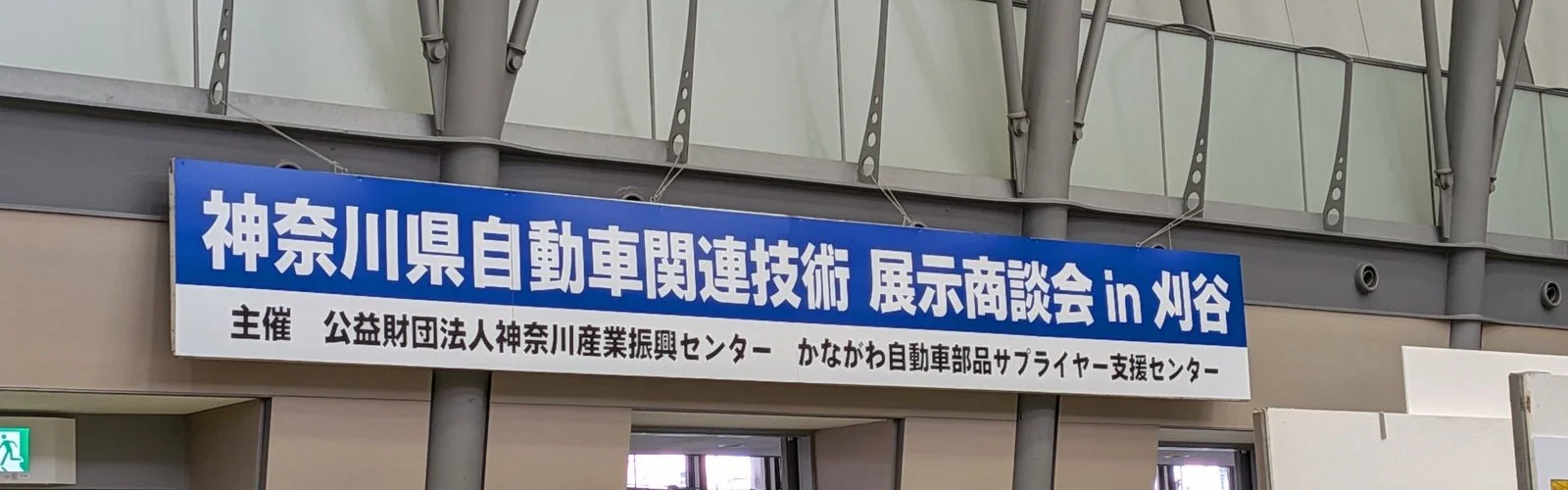
Organized by the Kanagawa Industrial Promotion Center (KIP), this Japanese-language domestic trade show brought together 38 automotive parts suppliers from Kanagawa Prefecture, presenting 66 proposals (organizer's figures). Kariya is home to a dense cluster of automotive parts manufacturers, and many visitors stopped by our booth over the two days.
Booth No. 19: Making Hidden Defects Visible
Photometric stereo captures several images while changing the lighting direction, revealing surface relief in three dimensions. We presented two proposals built on it, using panels and inspection images.
Fine scratches on glossy, complex parts. On shiny or intricately shaped components, small scratches get lost in reflections. Our proposal uses the TR-500, a collaborative robot system, to image each part from multiple angles.
3D inspection of every piece on lines that never stop. For continuously moving materials such as steel sheet and aluminum, the TR-300 captures the surface in 3D so that every piece can be inspected inline.
Live Demo: The TR-55 Tabletop Observation Unit
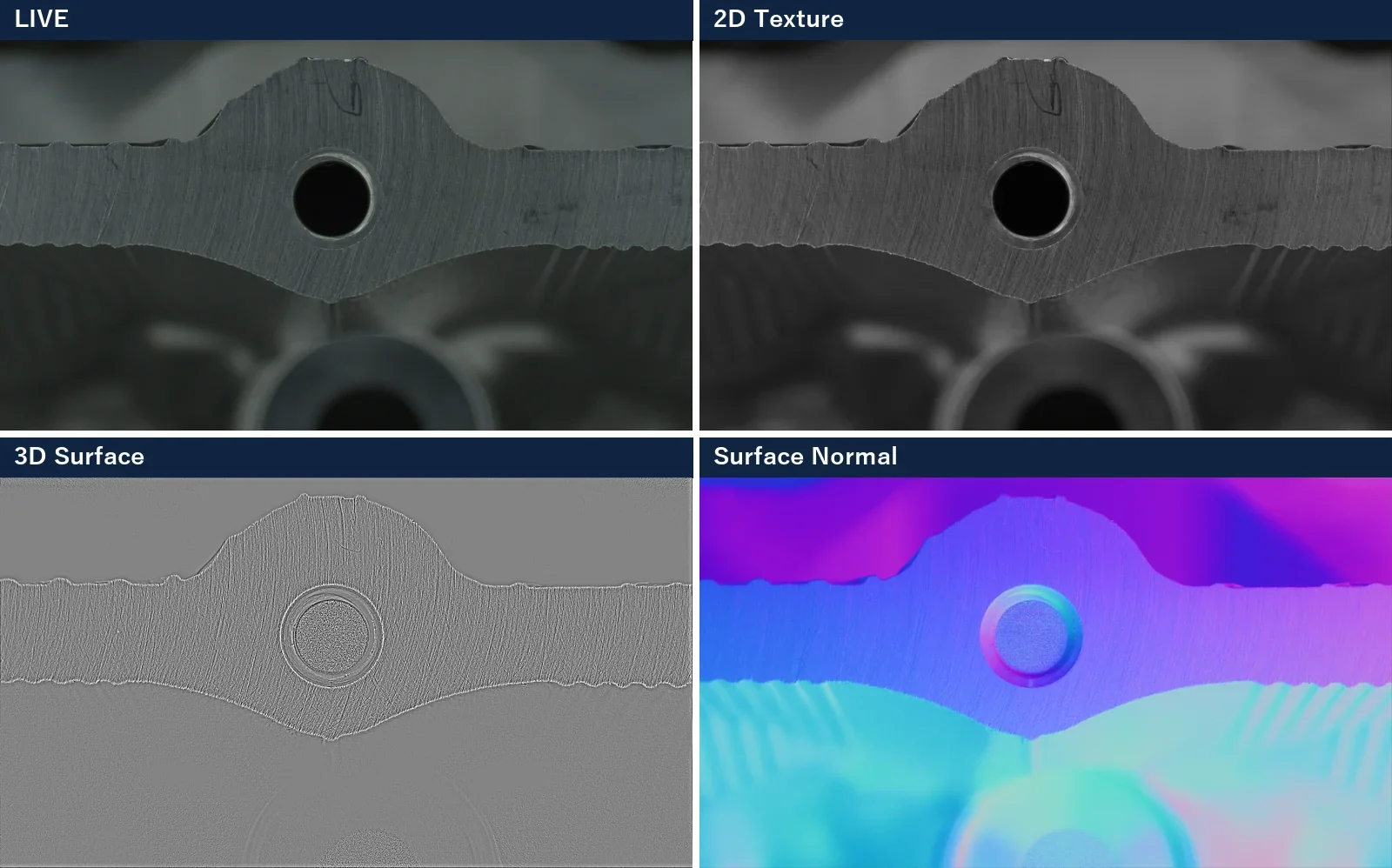
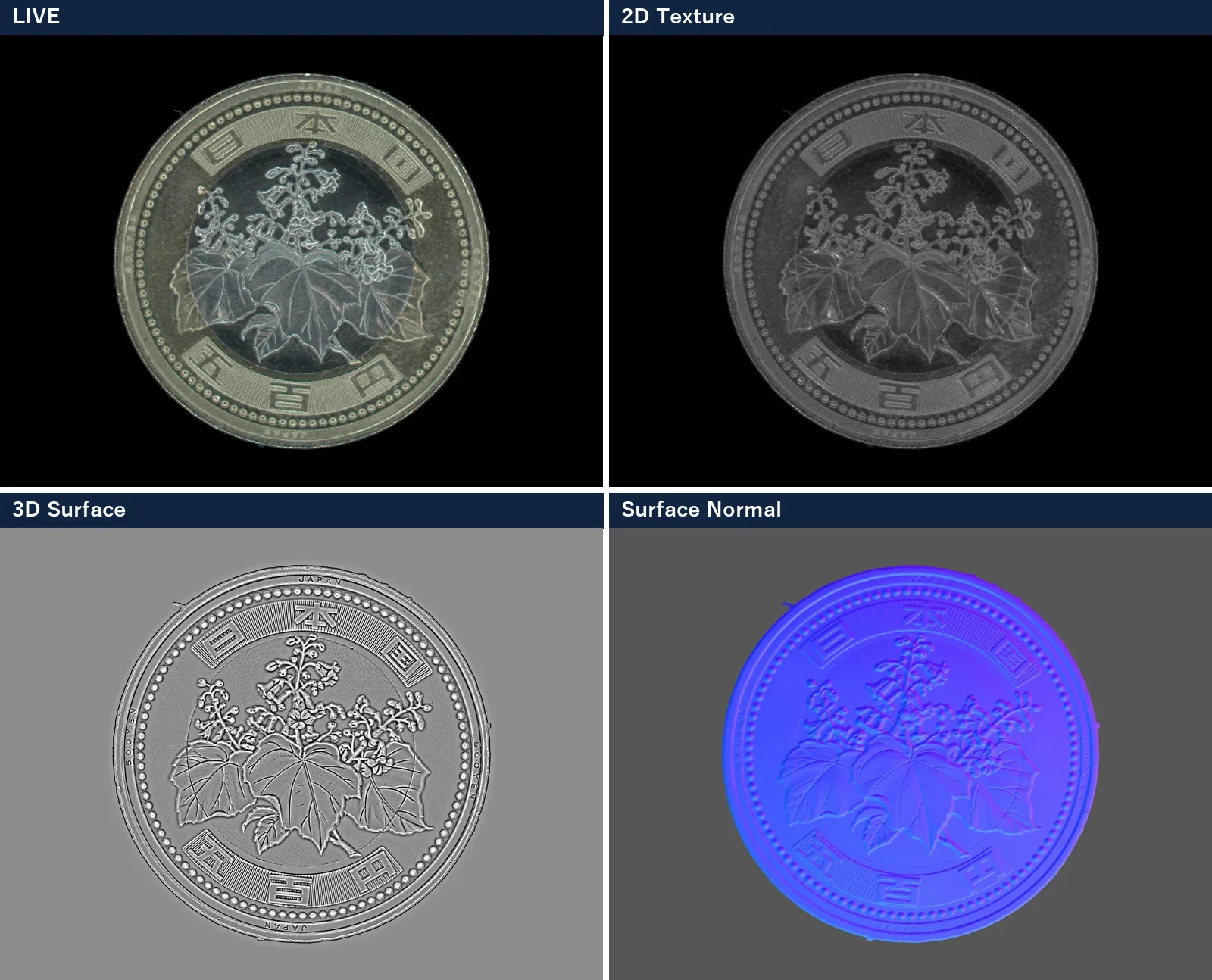
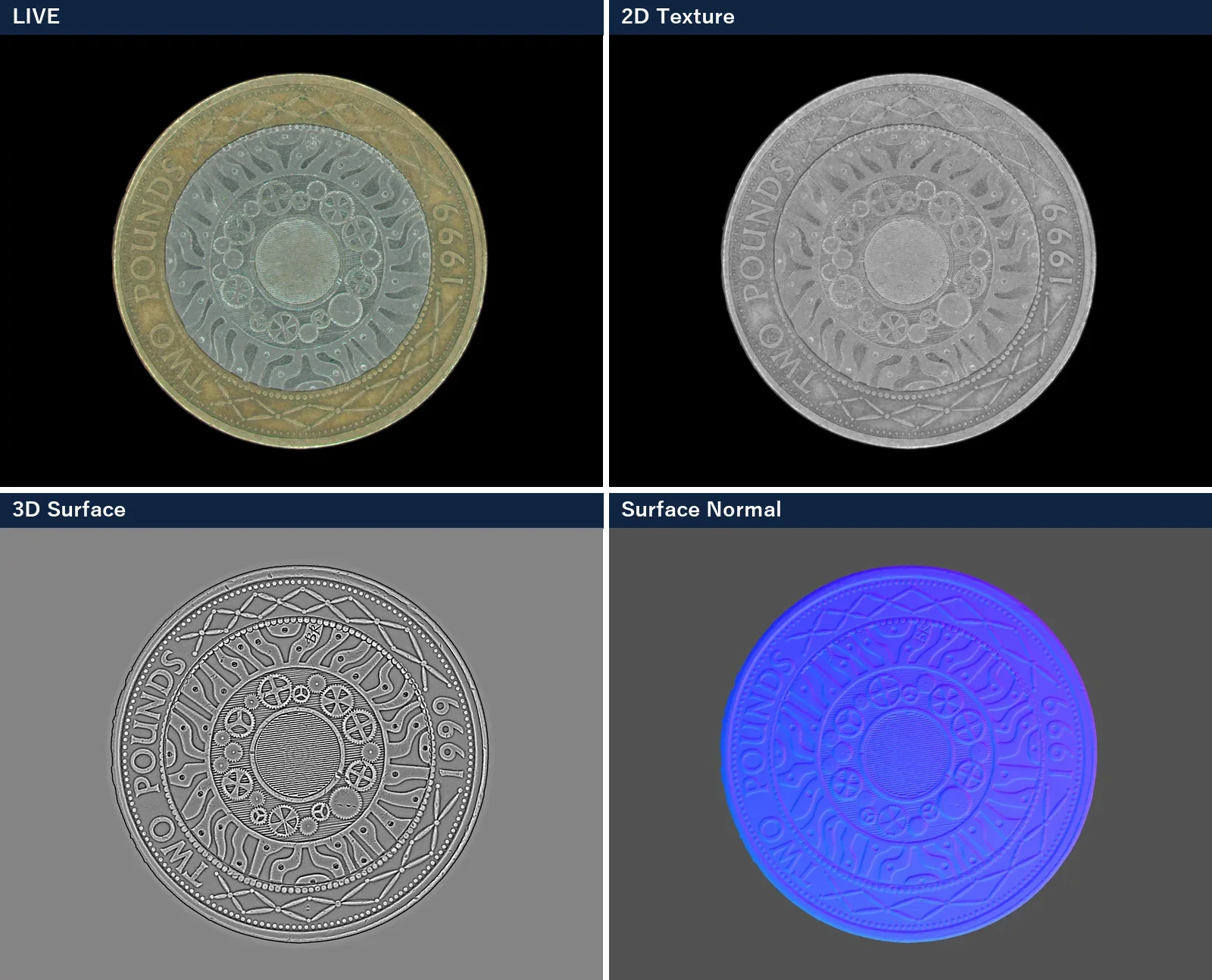
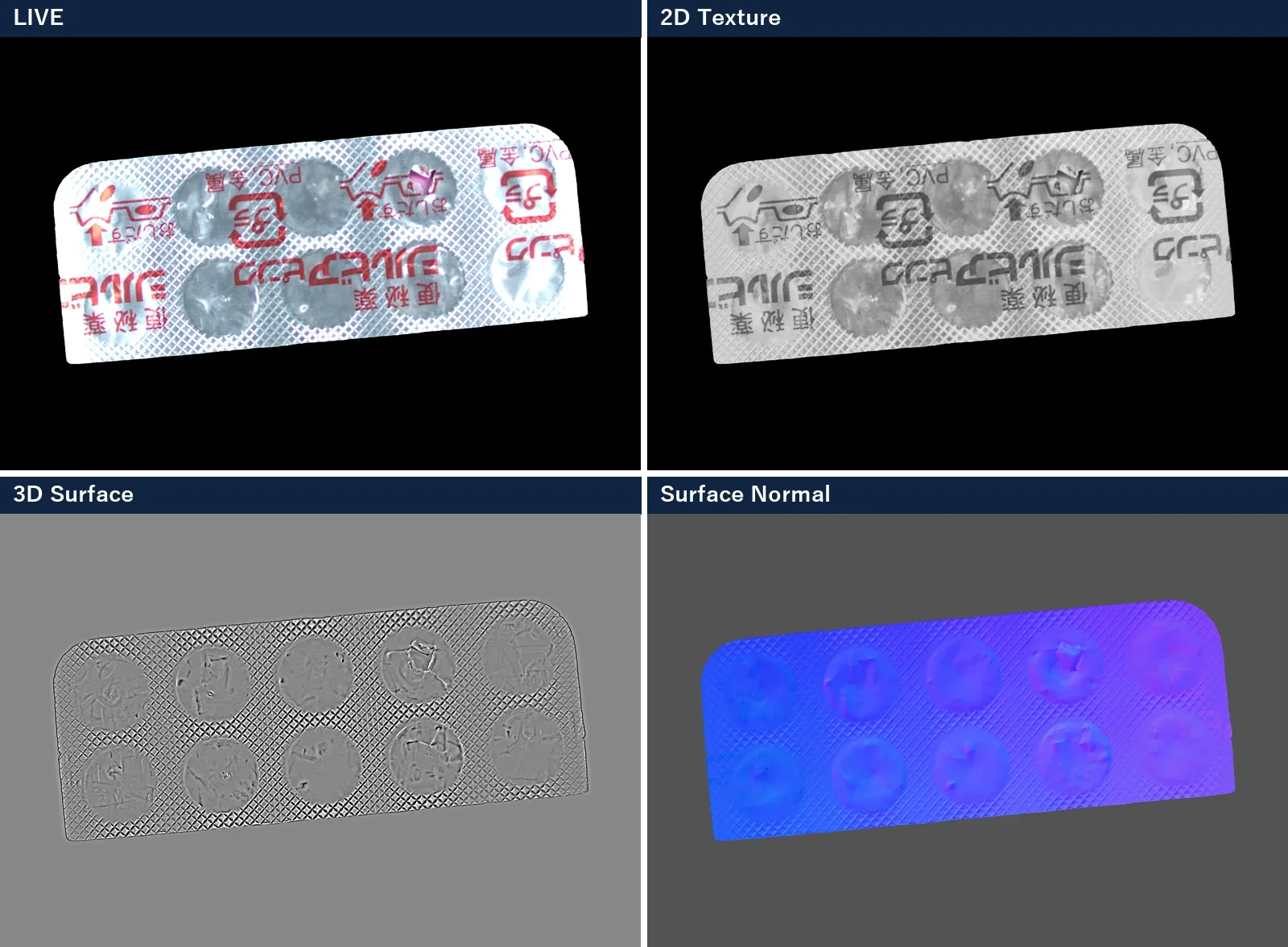
The highlight of the booth was a live demo of the TR-55, our tabletop observation unit. Place a sample on the stage, press a button, and the unit delivers four outputs: Live, 2D Texture, 3D Surface and Surface Normal.
Using our exhibit samples, visitors could watch surface relief that is hard to see in an ordinary photo emerge on the monitor as clear three-dimensional shape. Switching between the views side by side made the core idea tangible: what the eye misses, light and geometry can reveal.
Below are sample captures made with FORESIGHT STEREO. A single capture delivers four outputs: LIVE, 2D Texture, 3D Surface and Surface Normal.
Missed Us in Kariya?
If you could not make it to Kariya, we would still be glad to hear about your inspection challenges. Whether photometric stereo works for a given part depends on its material, surface condition and defect shape, so the reliable answer always comes from testing real samples.
Contact us to discuss your parts.
Email: info@tomomi-research.com / Web: https://www.tomomi-research.com/